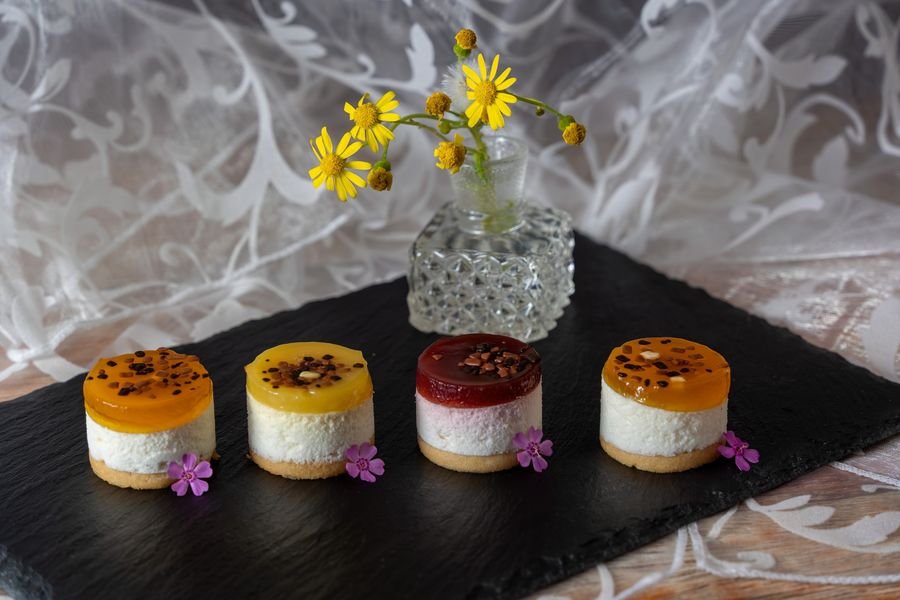
A book you can be holding two minutes from now. Ten chapters, every recipe tested — and the sweetener pages at the front that are the difference between a cheesecake and a compromise.
Instant download · 30-day money-back guarantee
Maybe it was a number on a test result. Maybe it was the scales, or just the way you feel by four in the afternoon. Whatever started it, you made the decision and you've stuck to it, and mostly you don't miss it.
Except at the table. Everyone else has a slice of something and you have coffee. Or you have the slice and spend the rest of the evening quietly annoyed with yourself.
Neither of those is much of a choice. And there's no good reason a cheesecake — of all things, a cake made mostly of cheese and cream — should be the thing you have to give up.
You've had the ones that come back cold on the tongue, that odd minty chill about three seconds after the bite. The ones that went grainy overnight. The one that never set at all and had to be eaten with a spoon while you told everyone it was "meant to be like that".
None of that is your fault, and none of it is the recipe being difficult. It's that most sugar-free recipes are ordinary recipes with the sugar swapped one-for-one, by somebody who never checked what that does to the texture.
Every one tested in a home kitchen, in a home oven, with cream cheese from an ordinary shop. Here are four of them, so you know exactly what the rest look like.
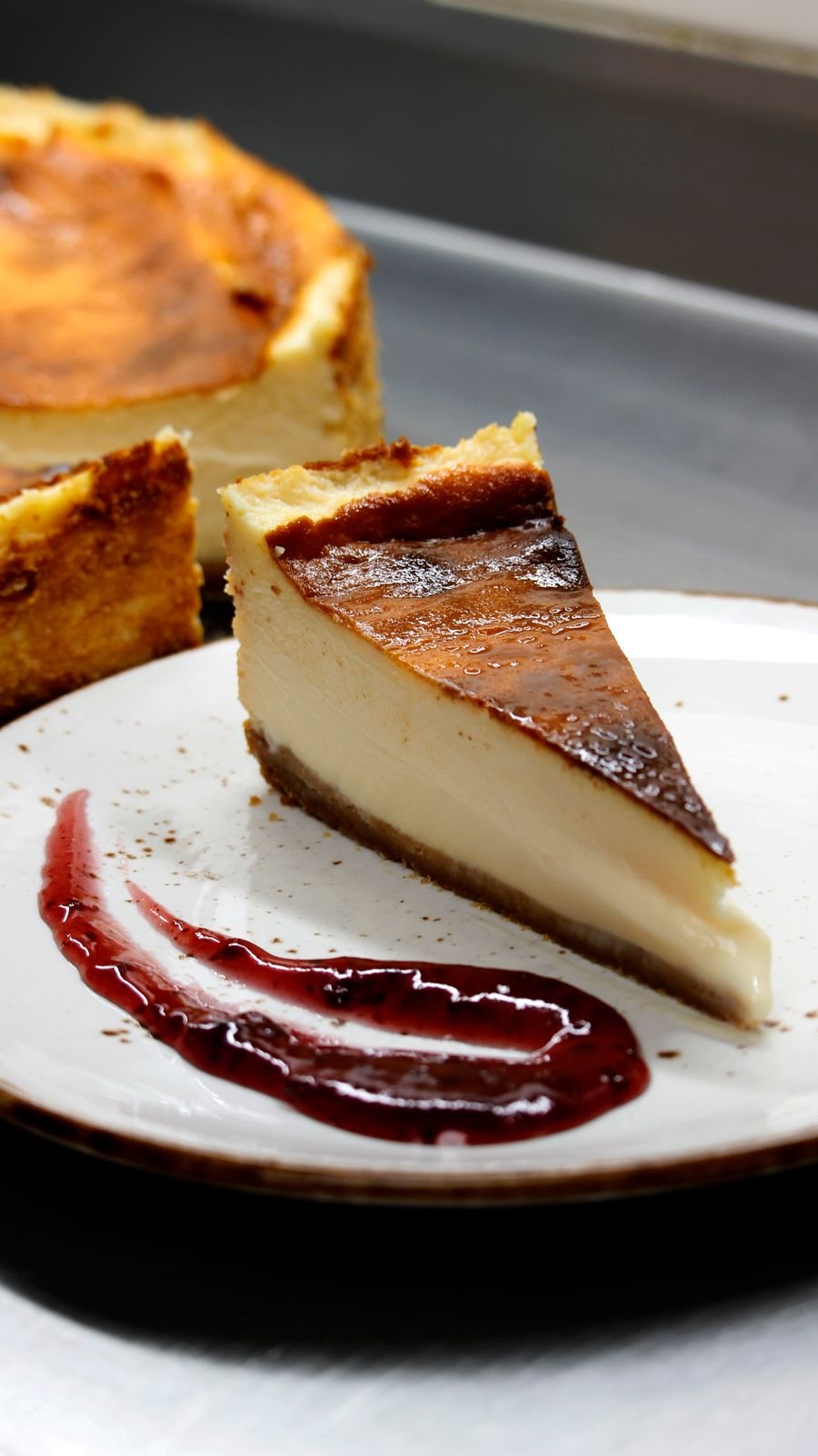
No crust, no water bath, and it is supposed to crack and sink — which makes it the most forgiving cheesecake there is. The dark top comes from heat, not sugar, so it works here exactly as it always did.
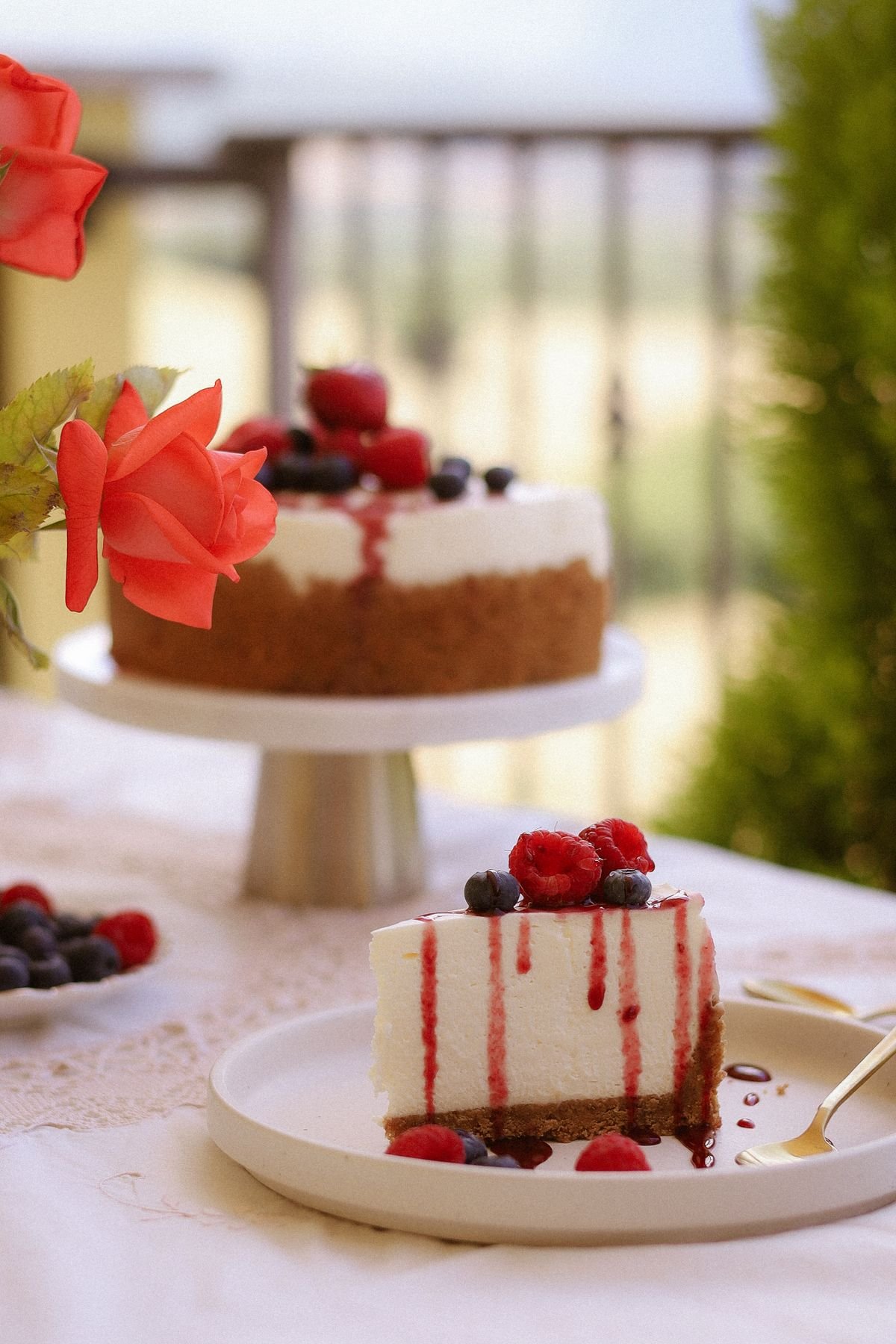
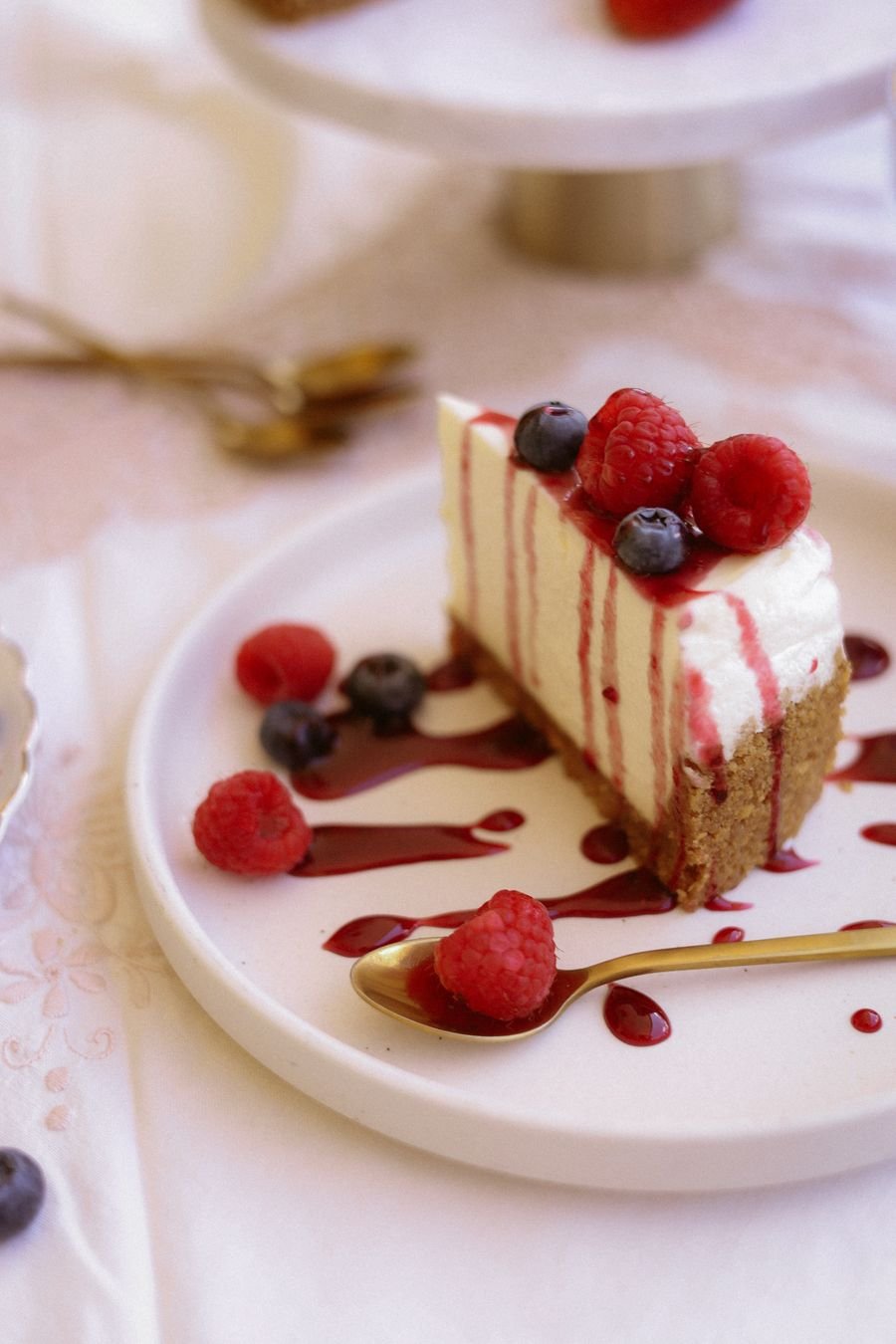
The oven never goes on. Sets firm in the fridge overnight and slices clean, with a berry sauce cooked down until it thickens on its own rather than with sugar. The one to make in August.
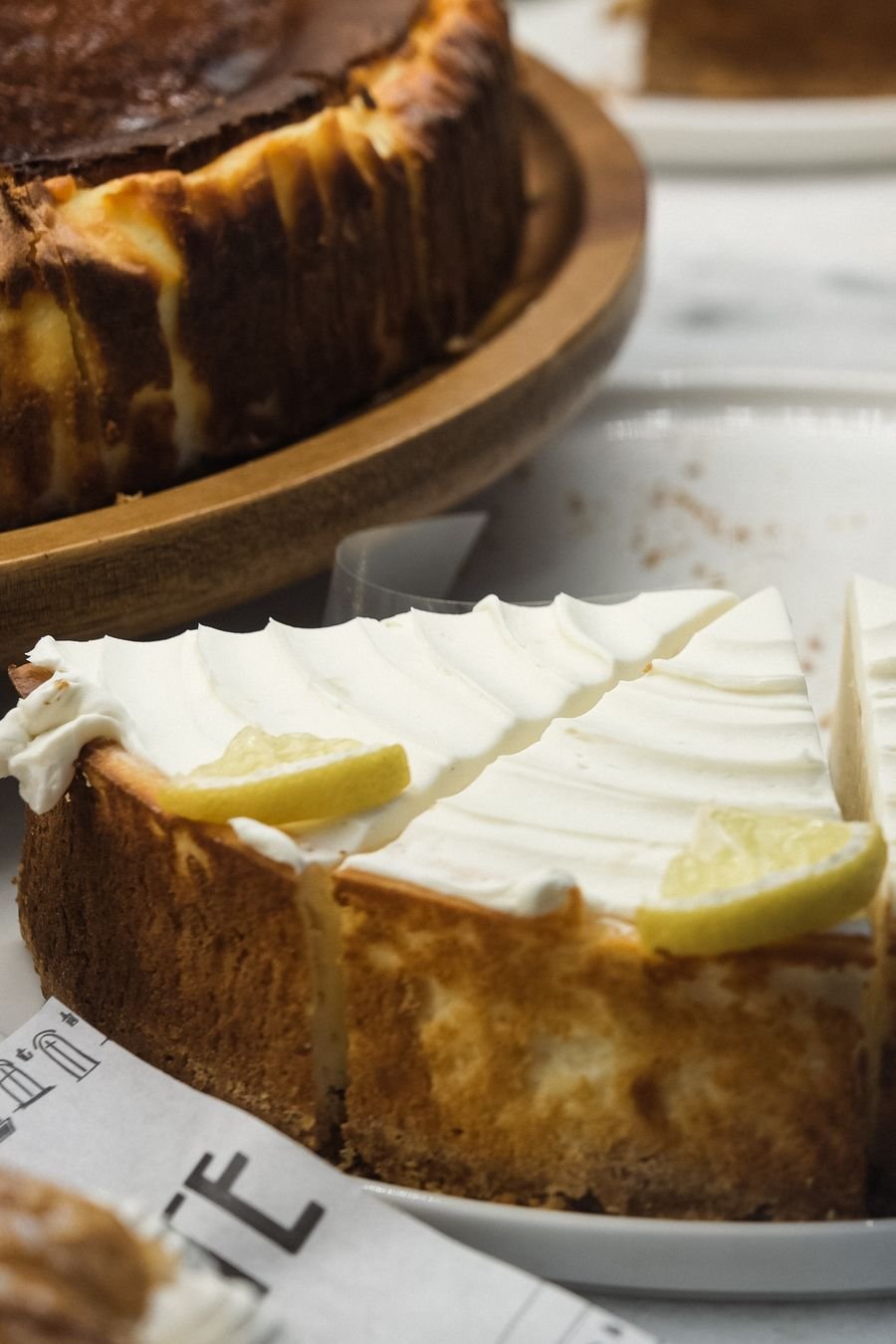
Sharp enough that nobody goes looking for the sweetness. The sour cream layer goes on for the last ten minutes and sets to a smooth white lid that hides anything the filling did underneath.
One tin of individual cheesecakes, four different tops. They chill in half the time, they never crack, and everybody gets the size they actually wanted.
First slice — the two we'd start you on
Organised the way you'd actually go looking for one — by what you feel like eating and how much time you have.
Contents
New York, vanilla bean, sour cream top, Basque burnt. The ones everyone recognises, rebuilt so they still taste right.
Fridge-set, no oven, no cracking. Including the two setting agents that work without sugar and the one that doesn't.
Dark, marbled, triple, and a cocoa crust. Which unsweetened chocolate to buy and what to do about the bitterness.
Swirls, compotes and glazed tops, thickened by cooking rather than by sugar so they stay glossy and set.
Lemon, lime, orange and passionfruit — the chapter that hides a lack of sweetness better than any other.
Espresso, chai, pumpkin, cinnamon, and a caramel made from cream and allulose that actually browns.
Minis, jars and bites. Faster to chill, impossible to crack, and easier to keep to one.
Baked in a square tin and cut into squares. No springform, no water bath, no ceremony.
Almond, pecan, coconut and seed bases that hold together and stay crisp under a wet filling.
Cashew and coconut based, written as their own recipes rather than substitutions bolted onto a normal one.
Before a single recipe, the book deals with the three things that go wrong when you take the sugar out. Get those right and all hundred behave.
Which ones bake and which ones crystallise. Which one leaves the cold aftertaste and how to bury it. The swap ratio for each, in a table you can photograph and keep on your phone.
Sugar is glue. Take it out and a normal crust turns to wet sand — so these use fat and pressure instead, and blind-bake to stay crisp under the filling.
Overmixing, oven temperature, and the cooling. The water bath explained properly, plus how to get the same result without one.
The wobble, described so you can actually recognise it — and the internal temperature, if you'd rather use a thermometer than your judgement.
Both on every ingredient, plus °C and °F and tin sizes in inches and centimetres.
It's a PDF. Print the ones you love for the recipe folder, and keep the whole book on the phone propped against the mixer.
No login to forget. No monthly charge quietly leaving your account. No app that stops working the day a company changes its mind about what it wants to be.
It's a PDF. It downloads to your computer, copies to your phone, opens on a tablet, and goes through a printer. Back it up, email it to your sister, put it on a memory stick. It's yours in the way a book on a shelf is yours.
once · no subscription · yours to keep
One slice in a café costs about a third of this book.
Read the whole book, make as many as you like, and if it isn't what you hoped for, write to us inside thirty days and we'll refund the $24 in full.
You don't have to send anything back — you couldn't if you wanted to. And you won't be asked to justify it.
One hundred recipes, ten chapters, and about two minutes between here and the first one.